Are we metabolically different? So says William Wolcott in his book, The Metabolic Typing Diet.
A discussion from the Native Nutrition Yahoo group as well as my nutrition consulting coursework prompted me to look into MT. I was curious: could we actually look at nutritional therapy for people based on their individual metabolic types and could there actually be major differences? So, here's my opinions on what I've researched so far...
Wolcott (2000, p. 17) mentions: "When optimum energy is available to your body on all levels -- to your cells, organs, glands, and systems -- then optimum (balanced and efficient) functioning, or good health, is possible." He feels that depending on your metabolic type, the foods (macronutrients: protein, carbohydrates, and fats) that make your body run efficiently will not necessarily be the same foods that help someone else. This metabolic type is dependent on several factors: autonomic, endocrine, oxidative, acid/alkaline, prostaglandin, electrolyte, blood, consititutional, and catabolic/anabolic types. All of these factors affect how quickly your body metabolizes what you eat (as well as what you drink, feed your skin/hair, breathe, etc.)
To boil it down to a nutshell, after you complete the questionnaire in the book, you end up fitting into one of three categories: Protein Type, Carbo Type, or Mixed Type (a little of both Protein and Carbo Types). This seems a little too simplistic for me, but perhaps it is that simple? I am concerned that with all the various factors mentioned in the previous paragraph, there are only three types.
Dr. Ross Hauser has also created a metabolic typing diet using animals (lions, bears, otters, monkeys, and giraffes - oh my!) to identify varying optimal levels of protein, carbs, fats, and even vegetarian tendencies for one type. You can take a test online at http://www.hauserdiet.com/ to see which type you are. I fell into the otter category (modified high protein diet with emphasis on greens). I think otters are cool animals, so it's fun that I eat like one! My DH turned out to be a monkey with a balanced diet, and he generally doesn't need to eat as much protein as I do.
Interesting stuff... I definitely have more to read!
~E
Reference
Wolcott, W. (2000). The Metabolic typing diet: the ultimate guide to: premanent weight loss and optimum health, high energy and peak athletic performance, preventing and reversing disease, staying young at any age. New York: Doubleday.
Friday, April 3, 2009

Monday, March 30, 2009
Goodbye Dairy... Again! And other things (like, listen to your body!)
Sorry for the lack of posts... I've been spending alot of time lately packing other things into my schedule: studying (I'm behind in my Nutritional Therapies class), setting up my Community Supported Agriculture (CSA) pick-up in Tustin, setting up my online community for the OC Weston A. Price foundation at http://ocwapf.ning.com, rehearsing several times a week for my upcoming bellydance performances (this past weekend was a bridal shower performance!), doumbek drum lessons and practice.
So, you ask, what has happened in the past few weeks? ALOT!
I gave up on my experiment with raw grassfed dairy. After a month of eating raw milk and raw kefir and raw cheeses, I noticed scabs in the interior of my nose that would not heal and yucky, green nasal mucus. Sorry, I know, TMI. But, if you're healthy, your nasal mucous membranes should produce clear mucus. It's the only major change I have made in my diet, so I figured my body did not really like dairy after all. I have eliminated most of the dairy now (with some leftover grassfed butter to finish), and my nose is finally healing. I am sad to lose dairy, again, but happy that my body is grateful for the absence of bad dairy reactions.
This leads me to the point about listening to our bodies. Maybe I'm paranoid and using my body as a science experiment, but I think it is crucial to have a strong awareness of what is going on internally. I think Western lifestyles have left us being very disconnected to our bodies, and being in a rush or on the go all the time isn't helping! This is where taking up meditation, or yoga, or walking in nature, or even bellydancing or other activities that connect you to the physical, is very helpful for keeping you aware of the body and its needs.
And, if you are in need of healing (physical or emotional), keep a daily food log. It is amazing what writing all your food intake can show you, even if it is only for a week. I have been keeping a food log for months now, and it has helped me notice certain trends, such as eating good quality fats (coconut oil, cod liver oil) during the evening means that I have improved blood circulation in my hands and feet at night AND the skin on my fingers is no longer cracked. As well as the eat-dairy-bad-things-happen-to-me observation.
YMMV: Your milage may vary! You need to determine your own trends, so listen to your body!
Erica
So, you ask, what has happened in the past few weeks? ALOT!
I gave up on my experiment with raw grassfed dairy. After a month of eating raw milk and raw kefir and raw cheeses, I noticed scabs in the interior of my nose that would not heal and yucky, green nasal mucus. Sorry, I know, TMI. But, if you're healthy, your nasal mucous membranes should produce clear mucus. It's the only major change I have made in my diet, so I figured my body did not really like dairy after all. I have eliminated most of the dairy now (with some leftover grassfed butter to finish), and my nose is finally healing. I am sad to lose dairy, again, but happy that my body is grateful for the absence of bad dairy reactions.
This leads me to the point about listening to our bodies. Maybe I'm paranoid and using my body as a science experiment, but I think it is crucial to have a strong awareness of what is going on internally. I think Western lifestyles have left us being very disconnected to our bodies, and being in a rush or on the go all the time isn't helping! This is where taking up meditation, or yoga, or walking in nature, or even bellydancing or other activities that connect you to the physical, is very helpful for keeping you aware of the body and its needs.
And, if you are in need of healing (physical or emotional), keep a daily food log. It is amazing what writing all your food intake can show you, even if it is only for a week. I have been keeping a food log for months now, and it has helped me notice certain trends, such as eating good quality fats (coconut oil, cod liver oil) during the evening means that I have improved blood circulation in my hands and feet at night AND the skin on my fingers is no longer cracked. As well as the eat-dairy-bad-things-happen-to-me observation.
YMMV: Your milage may vary! You need to determine your own trends, so listen to your body!
Erica
Sunday, March 15, 2009
You Plan to Fail If You Fail to Plan... Meal Plans!
Many people are tightening their belts in this current economy, but that's not a bad thing when it comes to eating! How many countless times have you opened the fridge at the end of the week and there's a bunch of stuff in there -- you don't know how old all the unlabeled containers are and you have vegetables growing mold? Well, one way to solve that problem, help reduce waste (mother Earth will thank you!) and be frugal is to plan your meals.
Even if you're the best of cooks and you can make a "leftovers" soup or salad (which are both great ideas by the way!), you will probably benefit from meal planning. You can have a sense for how much protein sources to buy (vegetarian or animal) as well as different fruits, veggies, and grains (if you eat them). Since I go to my farmers market every weekend (and soon will be participating in my new CSA program!), I have a general idea of the different types of produce available. And, as you can see by my list below, I do try to keep my menu fairly simple, except for items on the weekend when I have more time to roast or do more time-consuming, labor-intensive cooking. I usually do a quick stirfry of my veggies with appropriate herbs, seasonings, and olive/coconut oil, or I will steam them and top them with grassfed butter. (Psst - alot of the nutrients in your veggies are more easily assimilated into the body with fat! And why would you want to eat your veggies plain anyway? =)
Erica's Menu for this week
Today/Sunday:
Dehydrate soaked walnuts
B - green smoothie with avocado, cucumber, and lemon
L - eat out with a friend
D - honey mustard lamb with broccoli garlic stirfry
Monday:
B- leftover lunch
L- leftover fish and veggies plus maybe some kale chips
D- eat out with sister-in-law
Tuesday:
B- bitter melon soup with eggs
L- leftover lamb and veggies
D- natural corned beef with braised green beans
Wednesday:
B- leftover bitter melon soup
L - leftover corned beef and veggies
D-beef veggie soup with crockpot roast, leeks, tomatoes, onions, fresh carrots, etc.
Thursday:
B- green smoothie
L- leftover soup
D- natural sausage veggie stirfy with broccoli, onion, carrots, cauliflower
Friday:
B- fried eggs
L-leftover stirfry
D- baked cumin chicken legs with whatever veggies I have left
Saturday:
Plan again!
Note- I don't include dessert because I usually do not eat dessert. My body does not react well to grains, dairy (as I have sadly found out recently even though it was raw or fermented grassfed dairy), sugar, or fruits, so I do not incorporate them into my meal plan much. Please follow your own plan and listen to your body! Your body will let you know what foods are best for it.
Thanks again to Jenna @ My Joyful Haven for being brave enough to post her meal plans!
Even if you're the best of cooks and you can make a "leftovers" soup or salad (which are both great ideas by the way!), you will probably benefit from meal planning. You can have a sense for how much protein sources to buy (vegetarian or animal) as well as different fruits, veggies, and grains (if you eat them). Since I go to my farmers market every weekend (and soon will be participating in my new CSA program!), I have a general idea of the different types of produce available. And, as you can see by my list below, I do try to keep my menu fairly simple, except for items on the weekend when I have more time to roast or do more time-consuming, labor-intensive cooking. I usually do a quick stirfry of my veggies with appropriate herbs, seasonings, and olive/coconut oil, or I will steam them and top them with grassfed butter. (Psst - alot of the nutrients in your veggies are more easily assimilated into the body with fat! And why would you want to eat your veggies plain anyway? =)
Erica's Menu for this week
Today/Sunday:
Dehydrate soaked walnuts
B - green smoothie with avocado, cucumber, and lemon
L - eat out with a friend
D - honey mustard lamb with broccoli garlic stirfry
Monday:
B- leftover lunch
L- leftover fish and veggies plus maybe some kale chips
D- eat out with sister-in-law
Tuesday:
B- bitter melon soup with eggs
L- leftover lamb and veggies
D- natural corned beef with braised green beans
Wednesday:
B- leftover bitter melon soup
L - leftover corned beef and veggies
D-beef veggie soup with crockpot roast, leeks, tomatoes, onions, fresh carrots, etc.
Thursday:
B- green smoothie
L- leftover soup
D- natural sausage veggie stirfy with broccoli, onion, carrots, cauliflower
Friday:
B- fried eggs
L-leftover stirfry
D- baked cumin chicken legs with whatever veggies I have left
Saturday:
Plan again!
Note- I don't include dessert because I usually do not eat dessert. My body does not react well to grains, dairy (as I have sadly found out recently even though it was raw or fermented grassfed dairy), sugar, or fruits, so I do not incorporate them into my meal plan much. Please follow your own plan and listen to your body! Your body will let you know what foods are best for it.
Thanks again to Jenna @ My Joyful Haven for being brave enough to post her meal plans!
Thursday, March 12, 2009
Hair Nutrition - FAIL!
After writing up this article about unsafe beauty products a few weeks ago, I decided to experiment with my hair. My previous JASON shampoo was rated as a "moderate hazard." So, I went "no 'poo" for at least 14 days. What this meant was washing my hair every other day, and on the days I did wash, I used baking soda for the wash and apple cider vinegar as a rinse. This was meant to be a good test to see if my hair felt better without the oil-stripping shampoos or the added chemicals.
A big FAIL for me! This is not to say that using baking soda and apple cider vinegar would not work for others, because there are alot of advocates out there online. I just could not get the greasy feeling to leave my hair, ever. Plus, on days when I bellydanced with my group, the apple cider vinegar smell (and maybe the baking soda smell too) would be extremely strong, to the point I was certain I was making others raise eyebrows. ACV smells good in food, but not as a perfume while sweating!
Alas, I am going back to something better. I found Dr. Bronner's Magic Soaps All-One Hemp Lavender Oil Liquid Soap that doesn't smell bad (lavender-scented!) or leave a greasy feel. And, the EWG's Cosmetic database rates it a 2 or "low hazard." Plus, you can use this soap for washing your body too, and probably a bunch of other things. I like!
Now, on to more experimenting with other beauty products...
I've also been doing some research on Metabolic Typing so should have a new post soon about that! Fascinating stuff about how we are all biochemically different from one another, so one diet doesn't fit all. Coming soon!
A big FAIL for me! This is not to say that using baking soda and apple cider vinegar would not work for others, because there are alot of advocates out there online. I just could not get the greasy feeling to leave my hair, ever. Plus, on days when I bellydanced with my group, the apple cider vinegar smell (and maybe the baking soda smell too) would be extremely strong, to the point I was certain I was making others raise eyebrows. ACV smells good in food, but not as a perfume while sweating!
Alas, I am going back to something better. I found Dr. Bronner's Magic Soaps All-One Hemp Lavender Oil Liquid Soap that doesn't smell bad (lavender-scented!) or leave a greasy feel. And, the EWG's Cosmetic database rates it a 2 or "low hazard." Plus, you can use this soap for washing your body too, and probably a bunch of other things. I like!
Now, on to more experimenting with other beauty products...
I've also been doing some research on Metabolic Typing so should have a new post soon about that! Fascinating stuff about how we are all biochemically different from one another, so one diet doesn't fit all. Coming soon!
Tuesday, March 3, 2009
My Top 10 Must-Have Ingredients
Thanks to Jenna at www.myjoyfulhaven.com for offering the idea to discuss this topic! Here is the list of my top 10 ingredients that I always enjoy on a weekly basis and cannot live without. They are in no particular order -- all good eats!
1. Garlic - in bulb form or peeled whole (refrigerated).
2. Coconut oil - cold-pressed, virgin, organic. I use this in my tea in between meals, on top of steamed veggies, the list goes on and on!
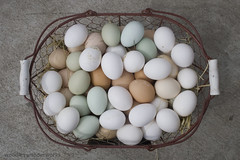
3. Eggs (the perfect food!) - I'm looking for no-soy eggs right now... tough to find but I will keep looking!
4. Wild salmon - canned or fresh. I can eat this stuff for breakfast!
5. Good Celtic or Himalayan salt or RealSalt - regular salt can have dextrose (from corn!) added to it!
 Photo courtesy of djprybyl
6. Kale - I love this green raw in a salad or baked like a chip!
7. Butter - preferably organic & grassfed... I'm going to try raw grassfed organic butter as soon as my current supply of Kerry Gold unsalted butter dwindles. I love it on top of steamed cauliflower & other veggies, eggs, etc.
8. A probiotic foods of some sorts: kimchi, kefir (my first attempt to make @ home today!), yogurt, etc.
9. Kombucha - yes, the weird, fizzy, slightly vinegary- and sweet-tasting drink. I'm gearing up to make this at home soon. It deserves its own category.. I'm so addicted to it!
10. Bones - for making homemade bone broth. Good for digestion, multiple uses, easy to make.
That's all, folks! What's on your favorite 10 list??? Please share!

1. Garlic - in bulb form or peeled whole (refrigerated).
2. Coconut oil - cold-pressed, virgin, organic. I use this in my tea in between meals, on top of steamed veggies, the list goes on and on!
3. Eggs (the perfect food!) - I'm looking for no-soy eggs right now... tough to find but I will keep looking!
4. Wild salmon - canned or fresh. I can eat this stuff for breakfast!
5. Good Celtic or Himalayan salt or RealSalt - regular salt can have dextrose (from corn!) added to it!
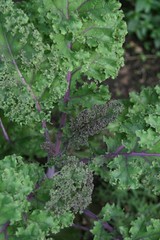 Photo courtesy of djprybyl
7. Butter - preferably organic & grassfed... I'm going to try raw grassfed organic butter as soon as my current supply of Kerry Gold unsalted butter dwindles. I love it on top of steamed cauliflower & other veggies, eggs, etc.
8. A probiotic foods of some sorts: kimchi, kefir (my first attempt to make @ home today!), yogurt, etc.
9. Kombucha - yes, the weird, fizzy, slightly vinegary- and sweet-tasting drink. I'm gearing up to make this at home soon. It deserves its own category.. I'm so addicted to it!
10. Bones - for making homemade bone broth. Good for digestion, multiple uses, easy to make.
That's all, folks! What's on your favorite 10 list??? Please share!
Saturday, February 28, 2009
Nutrition Consultants: Have you seen this video??
I am not sure how real this is... my DH's cousin Laurie sent me a link to this video, which hopefully I can embed in my website so you can see it without leaving the page:
Is this for real?? I have heard rumors about the ADA trying to pass a law to prohibit anyone without an RD from having a nutritional practice. My personal journey has taught me that I should leave my health to no one except me. I am my best healer.. but it is nice to have help from someone who knows what they are doing and can help me look at alternatives I have not considered before. I am very grateful for the help I have received from several chiropractors, naturopaths, trainers, massage therapists -- all of whom are helping me live a healthy, balanced life (at least as much as possible). I am alarmed that this does not leave us with many options.
Any thoughts?
Is this for real?? I have heard rumors about the ADA trying to pass a law to prohibit anyone without an RD from having a nutritional practice. My personal journey has taught me that I should leave my health to no one except me. I am my best healer.. but it is nice to have help from someone who knows what they are doing and can help me look at alternatives I have not considered before. I am very grateful for the help I have received from several chiropractors, naturopaths, trainers, massage therapists -- all of whom are helping me live a healthy, balanced life (at least as much as possible). I am alarmed that this does not leave us with many options.
Any thoughts?
Friday, February 27, 2009
Taking Nutrition Step by Step
Overwhelmed. That's how I feel. Now. I'm taking a moment to sit and ponder. And, I realize, I'm overwhelmed. Duh. It is my fault, of course. I'm trying to finish the Phase 1 of my masters degree by year's end. I'm scheduling time to coordinate a new bellydance choreography for my friend Winnie's birthday party in April. I'm taking a speech-enhancement meeting every other week. I'm signing up for dinners, meetings, drum circles, and other events every week. I'm not getting enough rest during the week and the weekends. And, I am only now wondering why my food plan isn't working out?
I realize now: I need to slow it down. If I eat well and take care of my body, I will have enough energy for everything else! If I were working with clients seeking nutritional advice, I would say, "let's take it one step at a time." Step by step. Progress, not perfection is the name of the game when it comes to healthy eating. Here is my general plan to maintaining wellness:
2) I eat very few to no grains. If I were to eat grains (which my health won't really allow much of) I would try to eat sprouted, soaked grains so they are more easily assimilated into the body. Nourishing Traditions is a fabulous cookbook that covers sprouting grains.
6) I am transitioning into eating more organic grassfed or pastured animal products. These animals are not injected with hormones, corn, grains, soy, or antibiotics to fatten them up. They have better nutritional value and are worth the expense! Here is a directory of local farmers that sell grassfed products. I don't know how well I tolerate raw milk, but I would consider raw dairy from grassfed cows and pastured eggs. I cannot stress the importance of grassfed protein, especially for people like me who have food intolerances to grains and soy (not to mention skipping out on all the other junk!).
7) I eat probiotic foods -- they are meant to be easily digested because of the healthy cultures they have that will support the friendly bacteria in your digestive tract. I suggest you try these out from the grocery store first before attempting to make them, just to make sure you like them first! Kombucha is a refreshing, fizzy, low-sugar, low-caffeine drink. Kimchi is a Korean version of sauerkraut. Raw cheeses have friendly cultures (stuff that eats up the lactose). There are alot of different probiotic foods. Find ones you like!
I try to incorporate all these steps into my weekly food plan, but some weeks are better than others. This week stunk. I ended up eating corn (remember Corn Nuts? Those overly-salty, crunchy fried corn bits?) a couple of days ago and am still paying for it. My body is not happy, but it really appreciated the sauteed spinach with garlic last night. I also ended up eating out twice this week unexpectedly. Another wrench in a perfectly meal-planned week. Next week will be better. Remember, progress, not perfection. Wishing you a progressive weekend!
I realize now: I need to slow it down. If I eat well and take care of my body, I will have enough energy for everything else! If I were working with clients seeking nutritional advice, I would say, "let's take it one step at a time." Step by step. Progress, not perfection is the name of the game when it comes to healthy eating. Here is my general plan to maintaining wellness:
** Before I get started, I cannot stress the importance of meal planning! It makes the week go by easier and you won't have that "what will we have for dinner?" question every night! It will save you money by not eating out all the time and not wasting food. I do my meal planning Friday nights and buy organic foods from the local farmer's market Saturday morning.
1) I fill up on fruits and (mostly) veggies with every meal. I try to eat a small salad with lunch and dinner, or at least one side salad with my main meal (dinner) of the day. I mix it up and try to have some raw and some cooked veggies every day. I find fermented veggies (see #7 below) easier to digest than some raw veggies. I drink water and very diluted tea as my main source of hydration (but not during meals!).
2) I eat very few to no grains. If I were to eat grains (which my health won't really allow much of) I would try to eat sprouted, soaked grains so they are more easily assimilated into the body. Nourishing Traditions is a fabulous cookbook that covers sprouting grains.
3) I would slowly cut out processed, refined foods, even from "natural food" stores. Donate what you can, use up what you have leftover. No need to waste... just don't buy more!
4) I would slowly switch from "bad" oils to "good" oils. I avoid all vegetable oils except maybe olive and coconut oil. A high quality organic butter made from grassfed cowmilk is doable. I wouldn't eat any other oils, except from raw or soaked/dried nuts and grassfed animal fats.
5) I would switch to organic fruits, vegetables, and meats as often as I can. Here's a good reference website for the best foods to buy organic. I snack on good, healthy nuts - soaking and drying them first makes them easier to digest. I also eat dried sea veggies, like nori, for snack for a good source of sodium and iodine.
6) I am transitioning into eating more organic grassfed or pastured animal products. These animals are not injected with hormones, corn, grains, soy, or antibiotics to fatten them up. They have better nutritional value and are worth the expense! Here is a directory of local farmers that sell grassfed products. I don't know how well I tolerate raw milk, but I would consider raw dairy from grassfed cows and pastured eggs. I cannot stress the importance of grassfed protein, especially for people like me who have food intolerances to grains and soy (not to mention skipping out on all the other junk!).
7) I eat probiotic foods -- they are meant to be easily digested because of the healthy cultures they have that will support the friendly bacteria in your digestive tract. I suggest you try these out from the grocery store first before attempting to make them, just to make sure you like them first! Kombucha is a refreshing, fizzy, low-sugar, low-caffeine drink. Kimchi is a Korean version of sauerkraut. Raw cheeses have friendly cultures (stuff that eats up the lactose). There are alot of different probiotic foods. Find ones you like!
I try to incorporate all these steps into my weekly food plan, but some weeks are better than others. This week stunk. I ended up eating corn (remember Corn Nuts? Those overly-salty, crunchy fried corn bits?) a couple of days ago and am still paying for it. My body is not happy, but it really appreciated the sauteed spinach with garlic last night. I also ended up eating out twice this week unexpectedly. Another wrench in a perfectly meal-planned week. Next week will be better. Remember, progress, not perfection. Wishing you a progressive weekend!
Subscribe to:
Posts (Atom)

 Posts
Posts


